Anyone interested in Chiang Rai temples can discover a fascinating mix of traditional spirituality, modern art, and regional history here. Alongside the world-famous sites, there are also many lesser-known temples. It is exactly this diversity that makes Chiang Rai a special destination for lovers of Buddhist temples.
Here I present my personal favorites—temples I have discovered and explored over the years, both famous landmarks and hidden gems.
Chiang Rai, Thailand, is the capital of the province of the same name and the northernmost province in the country. The city has a rich and eventful history: it was founded as early as 1262 by King Mengrai, the legendary ruler of the Lanna Kingdom. Today, according to official figures, around 77,000 people live here—manageable in size, pleasant, and far removed from the hustle and bustle of major metropolises.
While many travelers to Thailand automatically head to Chiang Mai, Chiang Rai is often underestimated. Yet the city and its surroundings have an enormous amount to offer: extraordinary temples, contemporary art, vibrant culture, and an impressive natural backdrop. From here, wonderful excursions can be made into the mountainous regions near the border with Myanmar, where coffee is grown and various ethnic minority groups live with their own traditions and ways of life.
Chiang Rai is also easy to reach. There are regular bus connections from Chiang Mai as well as direct flights from Bangkok and Phuket. In the future, the region is even set to be connected by rail to Bangkok and Laos.
Exploring the city itself is also well worth it. In addition to the famous temples of Chiang Rai, there are many lesser-known ones that are real discoveries. In this article, I introduce both well-known and hidden gems. The list will be expanded regularly over the coming weeks.
5 less known Chang Rai Temples
Wat Fang Min
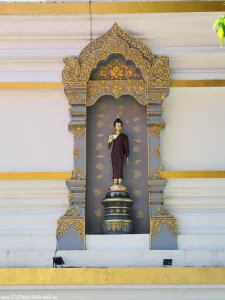
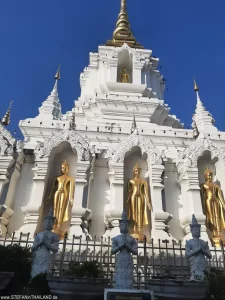
Wat Fang Min (วัดฝั่งหมิ่น) is a beautiful temple that has only recently been tastefully renovated. Behind the main temple buildings are what are likely some of the oldest temple ruins in the city. There you will find a chedi with a square base carrying four Buddha statues, as well as a small structure with additional Buddha figures. Nearby is a row of smaller, moss-covered chedis—each one representing a day of the week.
Only a few foreign tourists visit this fascinating temple, which is surprising given that a Lanna cultural center is located directly behind it, regularly hosting events and markets. The site is very close to the Kok River and is one of the most beautiful places to experience Loy Krathong in Chiang Rai.
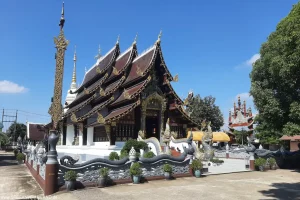
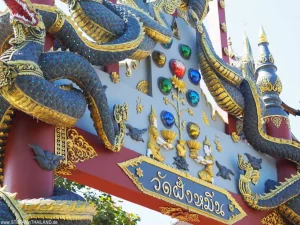
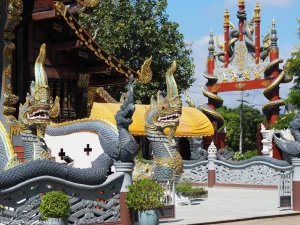
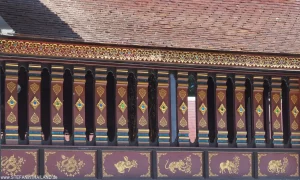
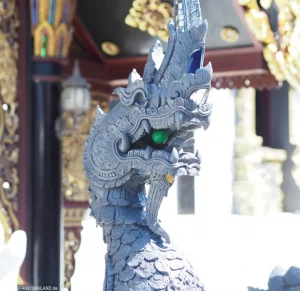
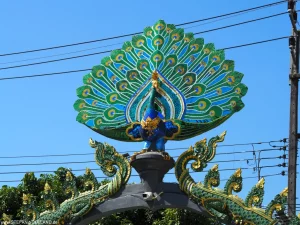
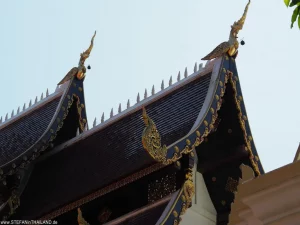
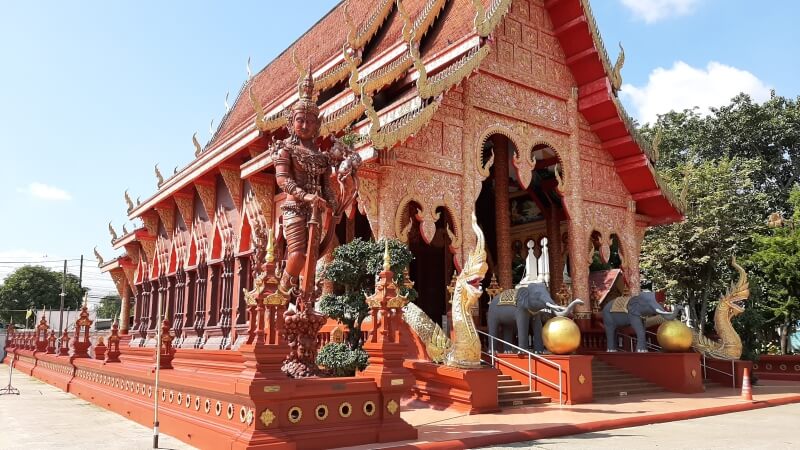
The red Temple
Wat Chiang Yuen (วัดเชียงยืน)
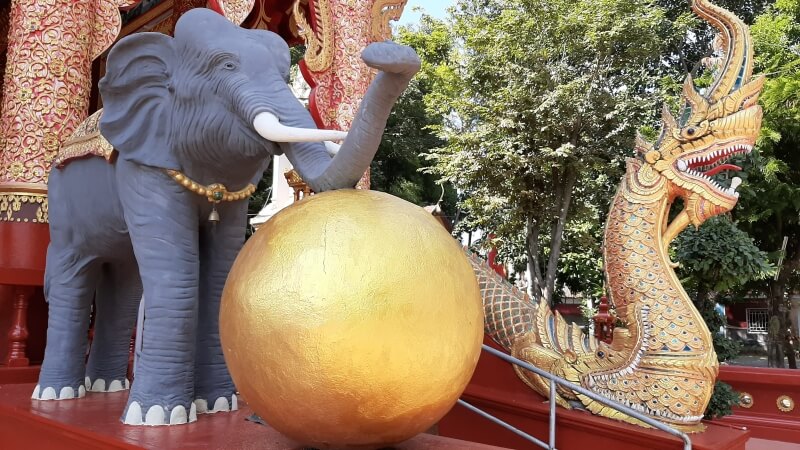
Was it a clever marketing trick, or did someone want to give this little-known wat a new aesthetic appeal? Either way, the effect works. Anyone looking to complete the full color spectrum of Chiang Rai’s temples should definitely take photos here.
As a reward, you can enjoy a massage at the neighboring massage cooperative, where very experienced therapists work. This is not a standard, one-size-fits-all treatment; on request, you receive targeted help for tension or specific complaints. The therapists focus individually on problem areas—a level of quality I have experienced in only a few places. All the more surprising is the price: at 150 baht per hour, the massage is quite affordable, even by northern Thailand standards.
Wat Doi Khao Kwai
Doi Khao Kwai is a small hill close to the city center. The wat of the same name is nothing particularly special, but the view over the city is excellent. It’s a lovely place to rise above the bustle of town and enjoy a moment of calm.
An Exceptional Temple in Chiang Rai
Wat Ming Muang (วัดมิ่งเมือง) is an exceptional temple near Chiang Rai’s famous Clock Tower that clearly stands out from all other temples in the city. It dates back to the late 12th or early 13th century and was founded by Queen Ta La Mae Sri, the consort of King Mangrai.
According to information from the Tourism Authority of Thailand, the temple was originally a Tai Yai (Shan) temple known as Wat Ngiao or Wat Chang Mup. It is also said that the temple was initially named after its founder: Wat Ta La Mae Sri.
The wooden viharn is called Viharn Mai Lai Khum. The main Buddha statue, Luang Phor Phra Sri Ming Muang, is over 400 years old. The stupa’s design is a blend of Burmese and Lanna styles and houses a relic of the Buddha.
Wat Khua Khrae on the Highway
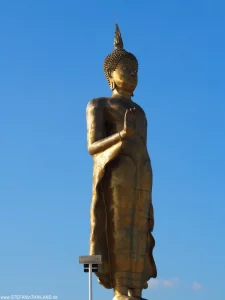
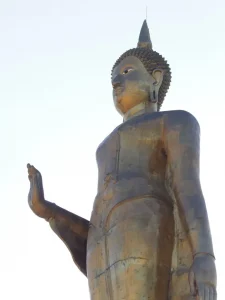
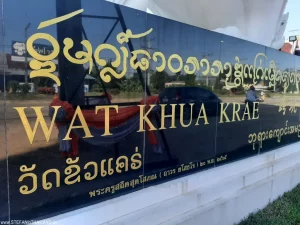
Wat Khua Krae (วัดขัวแคร่) was renovated during the year of the Chiang Rai Biennale and expanded with a tall statue of a standing Buddha. The temple is located along Highway No. 1, next to an art gallery and a restaurant known for its beautifully presented northern Thai specialties. A short stop is especially worthwhile early in the morning or in the late evening, when the light becomes soft.
Famous Temples in Chiang Rai
White Temple
Wat Rong Khun (วัดร่องขุ่น) is anything but typical for Thailand. It is not consecrated, which means that—unlike the more than 30,000 temples in the country—no monks live here. Nevertheless, the complex is one of Chiang Rai’s most famous attractions and draws thousands of visitors from all over the world every day.
The radiant white color symbolically represents the purity of Buddha, and it does so in a very striking way. From the moment you enter the grounds, it becomes clear that this place is different: in the outer areas you encounter grotesque masks, and on the bridge leading to the main building, hands reach up from the depths below—a scene that can be quite unsettling for sensitive visitors.
Inside, elaborate murals invite you to discover new details again and again. The artist Chalermchai Kositpipat deliberately incorporated motifs from Western pop culture, creating an unusual and sometimes dark visual universe. Unfortunately, photography is not allowed inside.
An earthquake in May 2014 destroyed large parts of the murals and damaged the roof and walls, temporarily putting the future of the temple at risk. Today, the complex is open to visitors again, who once more search for hidden depictions of Michael Jackson, Osama bin Laden, rockets, Batman, and many other surprising motifs.
Blue Temple
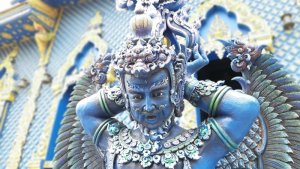
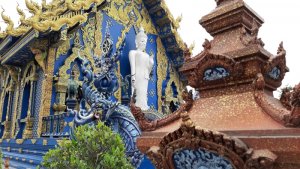
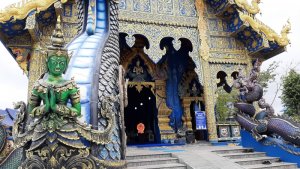
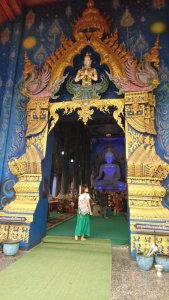
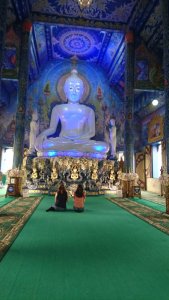
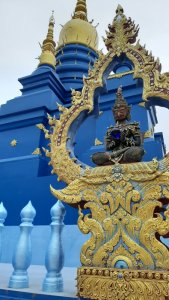
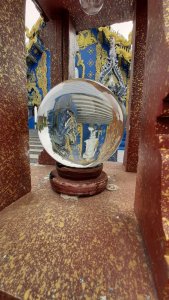
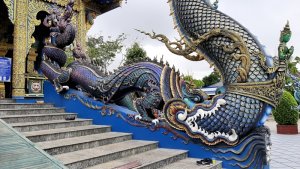
When you arrive at Wat Rong Suea Ten (วัดร่องเสือเต้น), the first things you notice are the two protective and fearsome guardian figures at the entrance. Once inside the grounds, you’ll find a few shops on the right, a fountain with statues in the center of the courtyard, and behind it the actual temple. Numerous imaginatively designed figures surround the main building, and the interior features equally creative murals.
On the site of today’s temple once stood the ruins of an abandoned temple that was at least 80 years old. In 1996, the local villagers decided to build a new temple on exactly this spot, but construction did not begin until October 2005. It is therefore one of the newer temples in Chiang Rai.
Blue—yes, that is the dominant color. It gives the temple a particularly aesthetic and pleasant atmosphere and happens to be my favorite color.
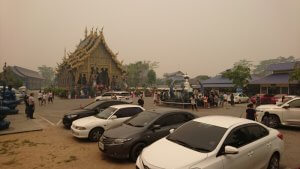
What I like less is the parking-lot feel of the grounds, which somewhat disturbs the mood that the design is meant to create. Of course, you also usually have to deal with large crowds—especially during the high season from Christmas to February.
Wat Phra Kaew
Wat Phra Kaew (วัดพระแก้ว) is located in the city center, opposite Overbrook Hospital. The temple dates back to the late 14th century, possibly even earlier. In 1434, the highly revered Emerald Buddha statue—also known as Phra Kaew Morakot—was discovered here.
The statue had been hidden inside the temple’s chedi until a lightning strike damaged the structure so severely that the statue was revealed. The original Emerald Buddha is now housed at Wat Phra Kaew in Bangkok. In Chiang Rai, a replica of the original statue can be seen.
Wat Phra Kaew in Chiang Rai also features an interesting museum with numerous Buddhist artifacts.
My suggestion for organized tours in and around Chiang Rai, Thailand
Wat Huay Pla Kang
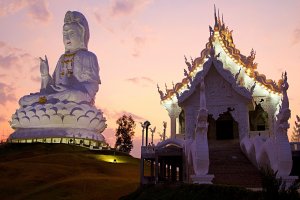
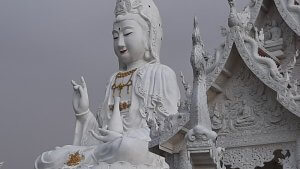
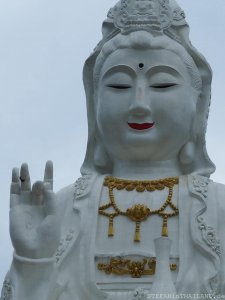
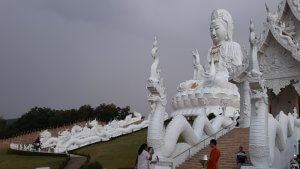
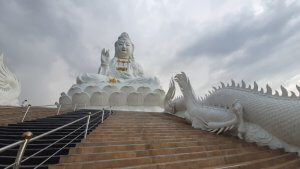
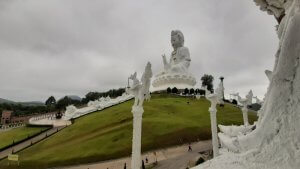
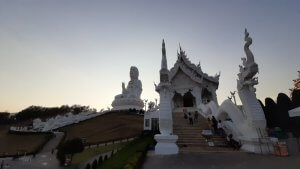
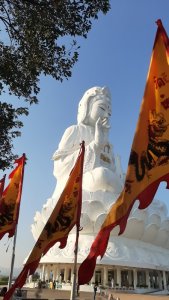
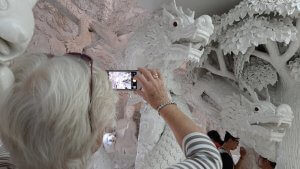
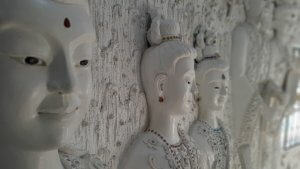
Even during the approach to Chiang Rai Airport, a striking landmark is clearly visible to the west: the 69-meter-tall, snow-white statue of Wat Huay Pla Kang, often referred to as the “Big Buddha Chiang Rai.” Although the complex is relatively young, it has quickly become one of the region’s most popular attractions—welcoming Thai visitors as well as guests from China and Western countries.
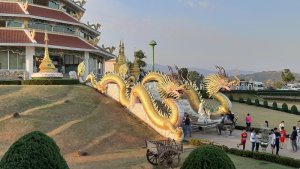
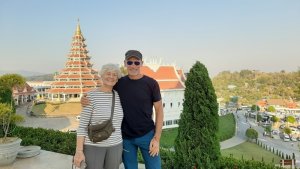
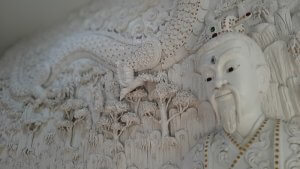
The temple complex is still under development, but its central elements are already completed. These include the impressive statue, a white temple, a Chinese pagoda, and a hospital. The project was initiated in 2005 by Abbot Phra Ajahn Phok Chokthisawaso and was officially recognized as a temple in 2009 by the Office of National Buddhism.
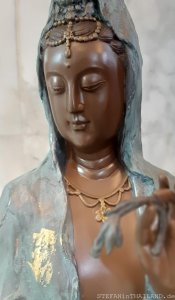
The large white figure does not depict Buddha, but Guanyin, the Chinese goddess of mercy. Her gentle, almost feminine face is characteristic of this representation. In Thai Buddhism, Guanyin is regarded as a bodhisattva who helps people on their path to enlightenment. Another striking feature is the nine-storey Chinese pagoda, Pokchokthama Chedi, which houses a large wooden statue of Guanyin inside.
Ban Dam – Black House
Not a temple, but the perfect contrast to white, blue, and red. Is it a museum, a gallery, or something beyond categories? Find out for yourself: Black House Chiang Rai
Hotels in Chiang Rai
I looked around the city for nice places to stay. The result is 9 recommendations in different price ranges and in various parts of the city, plus 2 extras. There’s something for every budget.
My favorite hotel is La Patta. It’s just a few minutes’ walk from the Night Bazaar, has a beautiful design, and is surprisingly quiet despite its central location.
Chiang Rai Temple Map
Frequently Asked Questions about Chiang Rai Temples
What are the most famous temples in Chiang Rai?
The most famous temples in Chiang Rai include Wat Rong Khun (White Temple), Chiang Rai Blue Temple (Wat Rong Suea Ten), Wat Phra Kaew, Wat Huay Pla Kang, and Wat Sing.
What are some lesser-known temples worth visiting in Chiang Rai?
Some lesser-known temples in Chiang Rai that are worth visiting are Wat Fang Min, Doi Khao Kwai, Wat Ming Muang, Red Temple, and Wat Khua Khrae.
How can I get to Chiang Rai’s famous temples?
Most of Chiang Rai’s famous temples are easily accessible from the city by taxi, tuk-tuk, or hired car from the city center. Some may require a short drive outside the city.
Chiang Rai City is easy to reach from Chiang Mai, Bangkok, and other places in Thailand by plane or bus. It’s best to search for the right connection on 12go.
Is there an entrance fee to visit these temples?
Entrance fees vary depending on the temple. Some temples may have a small entrance fee, while others are free to enter. Wat Rong Khun and Wat Huay Pla Kang usually have entrance fees.
Are there any dress codes or etiquette I should follow when visiting Chiang Rai temples?
It’s recommended to dress modestly when visiting temples, covering shoulders and knees. Remove your shoes before entering temple buildings, and show respect to Buddha images and worshippers.
Can I take photos inside the temples?
Photography policies vary depending on the temple. In some temples, photography is allowed, but flash photography may be prohibited inside temple buildings. Always check for signs or ask before taking photos.
What is the best time to visit Chiang Rai temples?
Early mornings or late afternoons are generally the best times to visit temples to avoid crowds and the midday heat. However, some temples, like Wat Rong Khun, are also beautifully illuminated at night.
Are there guided tours available for Chiang Rai temples?
Yes, guided tours to Chiang Rai temples are available and can be arranged through tour companies or hotels. Alternatively, you can explore independently using maps or guidebooks.
Have a look on GetYourGuide for tours in Chiang Rai that include the well known temples.
These FAQs should help you plan your visit to Chiang Rai’s temples more effectively!
You might also be interested in:
MyDroneThailand – Drone registration service
5 Top Tips for SUVARNABHUMI AIRPORT Bangkok
My tips for you: trips in Chiang Rai province
Comparison of Bangkok Airport Hotels
Airplane
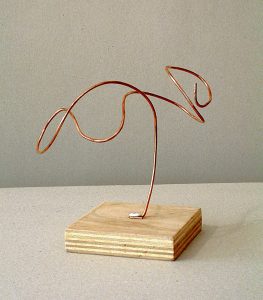
Copper wire, wood base. I created this piece in late 2008. For this work, I aimed to convey both the industrial heaviness of an airplane, but also the cloudlike floating quality you feel when you’re in one.
Sample Text Added
NEW TEXTS ADDED