The right hotel without unpleasant surprises: The best tips for your independent trip
You’ve booked your ticket and you have a rough route through Southeast Asia or South America planned out. But where are you actually going to sleep on your first night?
Booking.com shows 3,915 accommodations in Bangkok. Agoda has 1,648 “in the heart of the city.” In Hanoi, there are 7,732, and in Bogota, 2,175 accommodations.
Choosing the right accommodation is one of the most annoying parts of planning for many independent travelers: too much choice, contradictory reviews, and in the end, you pay for a room that looked completely different in real life than it did in the photos.
Yet the accommodation often determines whether a trip is relaxing or stressful.
In this guide, I’ll show you how to systematically find the right accommodation, properly compare prices, read reviews correctly, and know what to look out for on Booking.com and Agoda, including an important look at data privacy, because your personal data is involved with every booking.
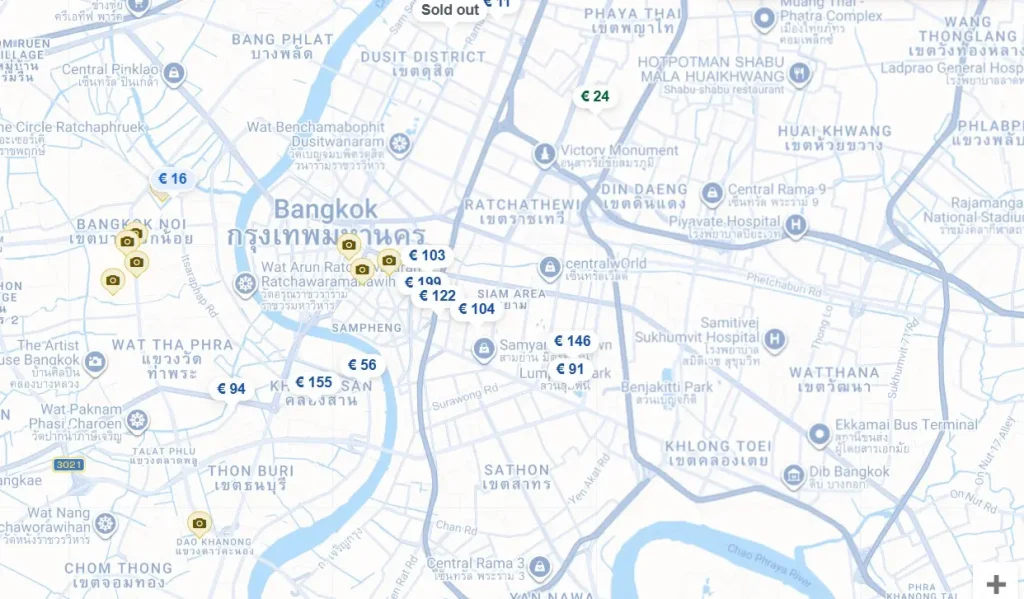
The cover image shows hotels in the heart of Bangkok with a rating of 9 out of 10. (free cancelation / different price categories / Agoda)
Here you’ll find current deals:
Make Good Use of Loyalty Programs
Both platforms reward frequent bookers. At Booking.com, you automatically progress through the Genius program: Genius Level 1 is active from the start, Level 2 requires five completed stays within two years, and Level 3 requires fifteen. As your level increases, you can receive up to 20% off participating accommodations, free room upgrades, complimentary breakfast, and priority customer service.
One important thing to know: Once you reach Level 3, it remains active permanently, even if you don’t make any bookings for a longer period.
Agoda uses a similar tiered system with AgodaVIP (Gold, Platinum, and the newly introduced Diamond tier), which is also based on your booking activity. At higher tiers, you get access to exclusive discounts, sometimes up to 25%, priority support, and early access to limited-time offers.
If you’re going to be traveling independently for an extended period and booking many individual stays, it can be worthwhile to consistently use one platform so you can reach the higher tiers faster, even if that means giving up a few euros in savings on an individual booking with a competing platform.
Data Privacy Notice: What to Look Out for When Sharing Your Data
With every booking, you share more data than you may realize. Your name, contact details, payment information, and sometimes even passport details are not only shared with the hotel but also with the booking platform itself. Here are a few things you should pay attention to:
- Account vs. Guest Booking: If you don’t need a permanent profile, many platforms also allow you to book as a guest instead of creating an account with your data stored.
- Marketing Consent: When completing your booking, look out for pre-selected checkboxes for newsletters or partner offers. These can generally be unchecked without affecting your booking.
- Payment Details: Check whether your credit card details are only being used for this booking or are being stored permanently in your account. If you don’t want this, you can usually adjust or disable this in your account settings.
- Sharing Data with Third Parties: According to their privacy policies, both Booking.com and Agoda may share data with affiliated companies, payment service providers, and, in some cases, advertising partners. It’s worth checking the latest privacy policy before making your first booking, as these terms can change over time.
- Rights under the GDPR: If you’re booking from the EU, you generally have the right to access, correct, and delete your personal data, including when dealing with internationally operating booking platforms, provided they operate in the EU or target EU citizens.
Hidden Gems Beyond the Major Platforms
Not every good accommodation is listed on Booking.com or Agoda. Especially off the beaten path, it’s worth looking beyond the major platforms.
Discovering Accommodation Locally Instead of Booking in Advance
In many parts of Southeast Asia and South America, there are small guesthouses that simply have no interest in being listed on major platforms because the commissions are too high or the administrative effort is too great. If you’re traveling flexibly, it can be worthwhile to book the first one or two nights in smaller towns and then look for alternatives once you arrive, or simply walk around and explore.
Travel Forums, Facebook Groups, and Community Recommendations
Regional travel communities, such as country-specific Facebook groups or forums for long-term travelers, are often an underrated source of current, honest recommendations. There, you can often find insider tips on accommodations that are either not listed on major platforms at all or have only a few outdated reviews.
Local Guesthouses and Family-Run Accommodations
Family-run accommodations often offer not only a more authentic travel experience but also direct contact with people who truly know the area, from restaurant recommendations to warnings about tourist traps. The downside is less standardization, sometimes more basic amenities, and no booking guarantee through an app.
Location Is Everything – Choosing the Right Area
The best price is no use if you end up spending an hour every day getting to the next attraction.
Evaluating Accommodation Locations in Unfamiliar Cities
Before every booking, ask yourself: How do I get from the airport or bus station to the accommodation? How far is it on foot to a lively, safe city center? Are there restaurants, supermarkets, or ATMs nearby? In many cities in Southeast Asia and South America, it’s also worth considering traffic noise. Rooms on main roads are often cheaper but can be significantly louder.
Google Maps as a Research Tool
Before you book, take a look at Google Maps in satellite and street view modes. Street View often gives you a more realistic impression of the surroundings than the polished photos on booking platforms. Also pay attention to the number and ratings of restaurants, cafés, and shops nearby. This can tell you a lot about how lively and safe a neighborhood actually is.
Major Cities vs. Remote Destinations
In major cities like Bangkok, Ho Chi Minh City, Bogotá, or Lima, the location can vary significantly from one street to the next, so detailed research is especially worthwhile. In smaller, remote destinations, the exact location is usually less critical, but accessibility becomes more important. Check how you’ll actually get there and whether local transportation is available if the accommodation is located outside the main area.
Comparison Articles
I’ve tested and compared hotels in specific locations to help you find the right accommodation. For example, my article My Recommendation for One Night at Bangkok Airport compares hotels near Suvarnabhumi Airport in Bangkok across different price ranges.
Stay Flexible: Book in Advance or Book Spontaneously?
The never-ending debate among independent travelers: plan everything in advance or make decisions spontaneously?
When Booking in Advance Is Essential
During peak season, at popular destinations like Bali, Chiang Mai during the Songkran Festival, or Cusco before a Machu Picchu trek, finding accommodation without booking in advance can be difficult. Good accommodations fill up quickly, and prices can rise significantly at short notice. You should also book early for special occasions such as public holidays or local festivals.
The Benefits of Booking Spontaneously
Outside of peak season, spontaneity gives you real room to negotiate, especially with family-run accommodations. You can often negotiate a better price in person, particularly if you’re staying for several nights. You also remain flexible if your route changes, you don’t like a particular place, or you decide to stay longer on a whim.
The Hybrid Strategy
The most practical approach for most independent travelers is to book the first night after arrival, as well as stays in major cities or at transit hubs, in advance. This gives you peace of mind, especially after a long flight or overnight bus ride. Everything in between, particularly in smaller towns with plenty of accommodation options, can be left open so you can decide based on your mood and the weather.
Conclusion: Your Hotel, Your Trip, Your Choice
There is no one-size-fits-all perfect accommodation for your independent trip. But with the right criteria, a healthy skepticism toward reviews that seem too good to be true, and an understanding of your own travel style, you can reliably find good options. Compare prices across multiple platforms, read recent reviews critically, pay attention to the location, and stay flexible where it makes sense.
Whether you choose Agoda or Booking.com, what ultimately matters is that you feel comfortable in your accommodation while keeping track of the price, location, and your personal data.
Ready for your next booking? Compare current deals for your route now:
Please share this post with your friends.